
THE POWER OF TEMPERAMENT
What is temperament?
Temperament is the way a person is naturally designed to think, communicate, make decisions, process emotions, respond to stress, and relate to others.
It helps explain why people approach the same situation in very different ways. Some people are naturally driven and decisive. Others are relational and encouraging. Some are steady, loyal, and peaceful, while others are thoughtful, detail-oriented, and analytical.
Understanding temperament is not about putting people in a box. It is about giving people language for how they are wired so they can better understand themselves, strengthen relationships, communicate more effectively, and grow with greater self-awareness.
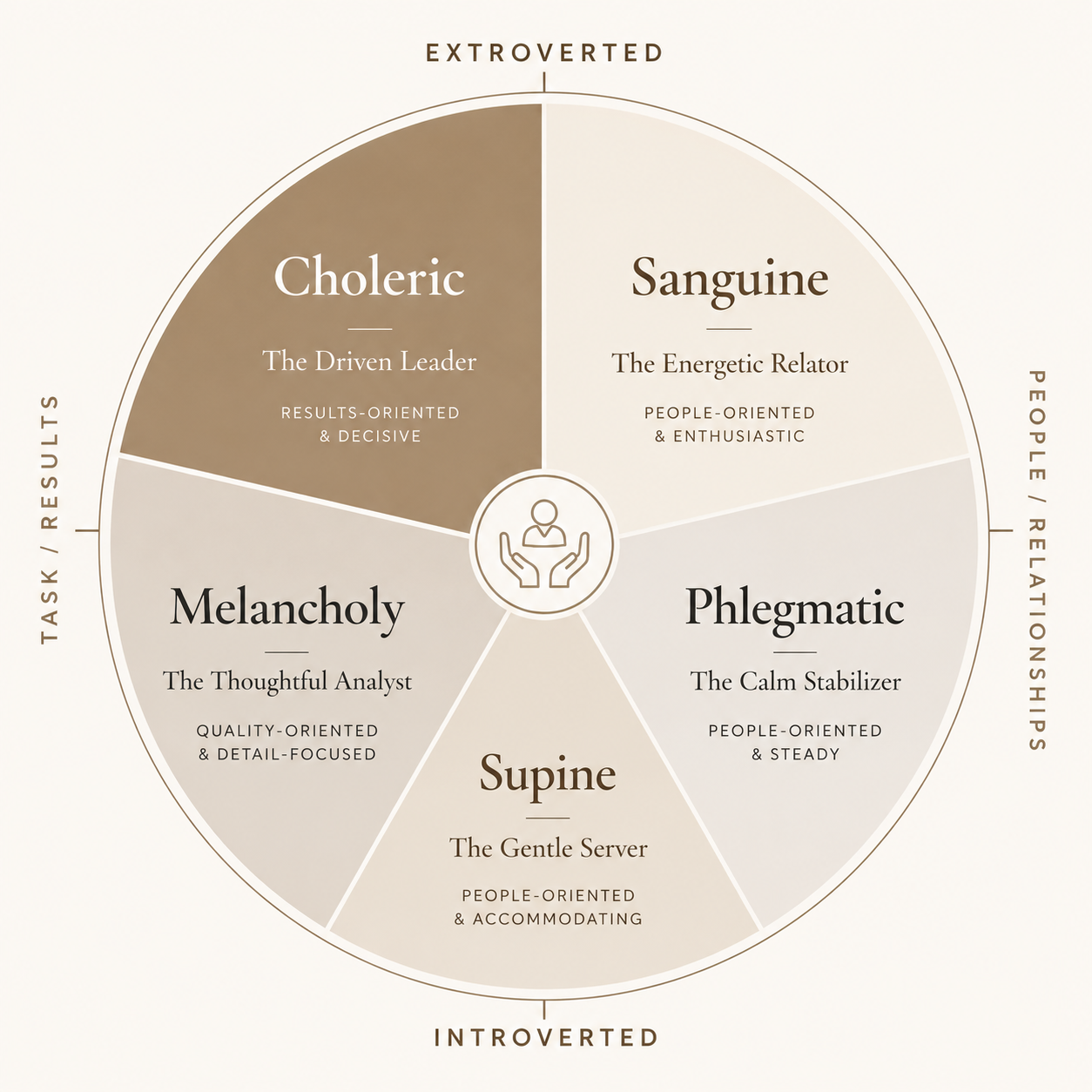
The five Temperament types:

Choleric
Cholerics are natural leaders who are driven, goal-oriented, and action-focused. They are often confident decision-makers who like to take charge, solve problems, and move things forward.
They tend to value results, efficiency, independence, and progress. At their best, Cholerics bring vision, strength, courage, and leadership. When under stress, they may become impatient, overly direct, controlling, or frustrated when things move too slowly.
- Common strengths: Leadership, determination, confidence, problem-solving, productivity
- Growth areas: Patience, listening, gentleness, collaboration, slowing down

Sanguine
Sanguines are naturally outgoing, expressive, and relational. They often bring energy, enthusiasm, optimism, and creativity into the spaces they enter.
They tend to value connection, encouragement, fun, and shared experiences. At their best, Sanguines are inspiring, warm, engaging, and able to bring people together. When under stress, they may become scattered, impulsive, overly emotional, or struggle with follow-through.
- Common strengths: Communication, encouragement, creativity, optimism, connection
- Growth areas: Focus, consistency, follow-through, listening deeply, managing emotions
Phlegmatic
Phlegmatics are calm, steady, dependable, and peace-oriented. They often bring balance, patience, and quiet strength to relationships, teams, and organizations.
They tend to value harmony, stability, loyalty, and cooperation. At their best, Phlegmatics are supportive, thoughtful, consistent, and easy to work with. When under stress, they may avoid conflict, delay decisions, become passive, or struggle to speak up for themselves.
- Common strengths: Patience, loyalty, steadiness, empathy, cooperation
- Growth areas: Assertiveness, initiative, decision-making, healthy conflict, confidence
melancholic
Melancholics are thoughtful, analytical, detail-oriented, and deeply reflective. They often bring wisdom, quality, structure, and careful thinking to what they do.
They tend to value accuracy, purpose, excellence, and depth. At their best, Melancholics are insightful, organized, loyal, creative, and dependable. When under stress, they may become overly critical, perfectionistic, withdrawn, or weighed down by details.
- Common strengths: Insight, organization, attention to detail, dependability, thoughtfulness
- Growth areas: Flexibility, self-compassion, letting go of perfection, communication, trust

supine
Supines are responsive, warm, and service‑oriented. Supines have a deep desire to help and to feel appreciated.
Supines often serve quietly and faithfully, noticing the needs of others and offering support without seeking the spotlight. They value kindness, acceptance, and belonging, and they feel most comfortable when they are welcomed and included.
- Common Strengths: Loyalty, compassion, supportiveness, empathy, cooperation, thoughtfulness, dependability, service-mindedness
- Growth Areas: Assertiveness, confidence, boundaries, independence, self-expression, self-worth
Why temperament matters
Every workplace and team is made up of individuals with unique strengths and communication styles. When these differences are misunderstood, conflict increases, morale suffers, and productivity declines.
Understanding temperament allows leaders to lead more effectively, teams to work together more efficiently, and organizations to create cultures where people flourish.
Designed for every people-driven environment
- Corporations and businesses
- Leadership teams
- Small businesses
- Nonprofit organizations
- Community organizations
- Educational organizations
- Customer service teams
- Human resource departments
Our Mission
Our mission is simple: to help people understand themselves and others so they can communicate better, lead better, work better, and thrive together.
Understand People Better
We help individuals discover how they are naturally designed to think, communicate, respond, and relate to others. Greater self-awareness creates stronger relationships, healthier communication, and more effective collaboration.

Strengthen leadership and teams
When leaders and teams understand temperament, they gain practical tools to reduce conflict, improve productivity, build trust, and create environments where people can work together with greater clarity and purpose.